Wucai Porcelain
Overview
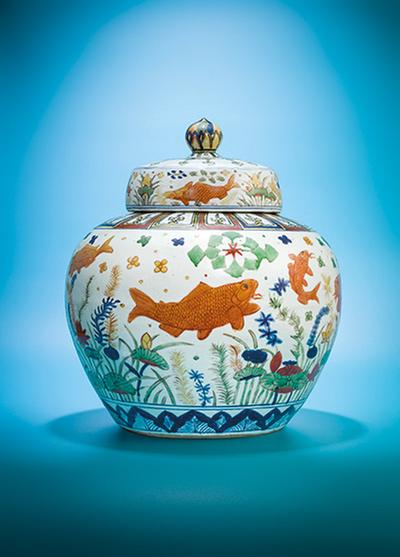
Wucai, meaning "five-color" in Chinese, is a distinctive style of Chinese porcelain known for its vibrant and polychromatic decorations. This porcelain is characterized by the use of over-glaze enamels in colors such as red, green, and yellow, often in combination with under-glaze cobalt blue, known as "qinghua." The technique reached its peak of development during the Ming Dynasty (1368-1644), particularly under the reign of Emperor Jiajing (1521-1567). Both official and civilian kilns produced Wucai porcelain, celebrated for its ornate patterns and dynamic color schemes. A significant piece, a 46-centimeter-high Wucai jar from the Jiajing period, is set to be auctioned by Christie’s, showcasing its continued appreciation and value in the art world.
Historical Development
The evolution of Wucai porcelain is situated within the broader context of Chinese ceramic history. Emerging as a new variety during the Ming Dynasty, specifically within the Jingdezhen Kiln, Wucai porcelain represented a departure from earlier techniques by incorporating a wider palette of colors. Unlike Doucai, another famous type of porcelain from the same era which combines underglaze blue-and-white with overglaze decoration, Wucai does not have a defined design outline before application of the colors. Instead, all colors are applied directly onto the base, creating a more integrated and harmonious pattern.
The development of Wucai was driven by both artistic innovation and technological advancements. The ability to achieve a broad spectrum of colors at lower firing temperatures (between 770 and 800 degrees Celsius) allowed artisans to experiment with new forms and motifs, expanding the visual language of porcelain art in China.
Differences with Related Porcelain Types
Wucai is often confused with other types of colorful Chinese porcelain, such as Doucai, Famille-Rose, and enamel-glazed ware. However, these styles can be distinguished by their unique characteristics and methods of production:
-
Doucai: Utilizes a combination of underglaze blue-and-white with overglaze colors. It requires two firings, with the initial stage creating a blue-and-white outline, followed by color filling and a final firing at a lower temperature.
-
Famille-Rose: Originating during the Qing Dynasty (1644-1911), this technique involved the use of opaque glass containing arsenic to create soft, pastel tones. These pieces are characterized by their smooth, flat surfaces and intricate designs.
-
Enamel-Glazed Ware: Initially inspired by European techniques, Chinese enamel wares were refined during the Qing period, resulting in vivid colors and layered patterns. The enameling process involves painting over an unglazed porcelain surface, which is then fired to achieve a raised texture with a bright, lustrous finish.
Cultural Significance
Wucai porcelain holds a significant place in Chinese art and culture due to its historical roots and the technical challenges associated with its production. The style not only reflected the aesthetic tastes of its time but also demonstrated the high level of skill among Chinese artisans. Pieces like the Jiajing period Wucai jar, which once belonged to renowned collector Hu Huichun, are treasured for their artistic merit and historical value.
The vibrant colors and dynamic patterns of Wucai porcelain continue to captivate collectors and enthusiasts worldwide, underscoring the enduring legacy of this unique art form. As exemplified by its presence in prestigious collections such as Beijing’s National Museum of China and in international art auctions, Wucai porcelain remains a symbol of Chinese cultural heritage and artistic excellence.
Techniques and Production
The production of Wucai porcelain involved a complex process that required meticulous planning and execution. Artisans first created a plain porcelain base, which was initially fired to form a durable surface. Next, the surface was painted with colorful patterns, each hue applied with precision to ensure consistency and vibrancy. The final product was then subjected to a secondary firing in a kiln at temperatures ranging from 770 to 800 degrees Celsius, a critical step to cement the colors onto the porcelain and achieve the desired finish.
Throughout its development, Wucai porcelain maintained a close relationship with the technological advances and artistic trends of its era. The introduction of new materials and techniques enabled craftsmen to push the boundaries of traditional porcelain art, resulting in a diverse array of styles and forms that continue to inspire contemporary ceramic artists.
Collecting and Appraisal
Wucai porcelain is highly sought after by collectors and connoisseurs for its historical significance and visual appeal. Pieces from the Ming and Qing dynasties are particularly valued, often fetching high prices at auctions and exhibitions. The appraisal of Wucai porcelain involves careful examination of several factors, including the quality of the glaze, the intricacy of the design, the condition of the piece, and its provenance. Article reference1. How to distinguish doucai, wucai, Famille-rose and enamel porcelain. chinaservicesinfo.com. 20182. A Ming Dynasty wucai porcelain jar to go under the hammer. chinadaily.com.cn. 2017Photo Gallery(10 pictures)CategoriesCultural HeritageTagChinese CeramicsIntangible Cultural HeritageChinese Cultural SymbolRelatedJingdezhen KilnCatalogue1. Overview2. Historical Development3. Differences with Related Porcelain Types4. Cultural Significance5. Techniques and Production6. Collecting and Appraisal- - - []








